
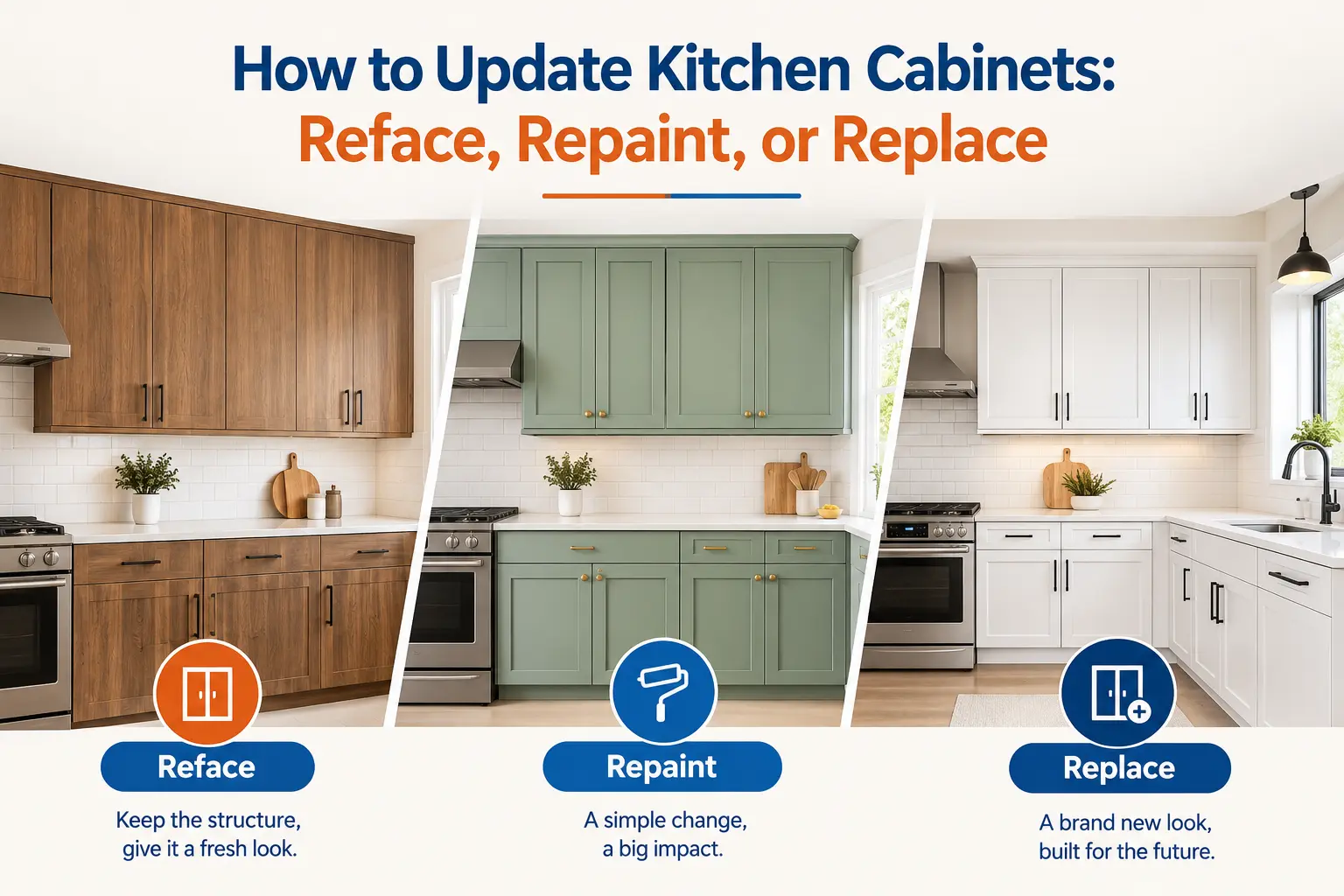
Cabinets set the tone for an entire kitchen, so it’s no surprise that how to redo kitchen cabinets is one of the first questions homeowners ask once they decide their kitchen needs an update. The right answer depends less on personal taste and more on the condition of your existing cabinet boxes, your budget, and how much you want the layout to change. CT Elite Remodel has repainted, refaced, and replaced cabinets in kitchens throughout Orange, Milford, Hamden, North Haven, Wallingford, and the rest of New Haven County, and the same three options come up on nearly every project. This guide walks through how do you redo kitchen cabinets using each approach, what each one costs, and how to know which one is right for your kitchen.
The Three Ways to Update Kitchen Cabinets
There are three real paths to updating kitchen cabinets, and each solves a different problem. Repainting or refinishing works when the cabinet boxes and doors are structurally sound but the color or finish looks dated. Refacing replaces the doors, drawer fronts, and visible surfaces while keeping the existing cabinet boxes in place, which changes the look more dramatically than paint without the cost of full replacement. Full replacement removes everything and starts over, which is the right call when boxes are damaged, the layout is changing, or you want a completely different storage configuration. Most homeowners assume replacement is the only real option, but for a lot of kitchens, refacing or repainting gets a comparable visual result for a fraction of the cost.
How to Update Kitchen Cabinets by Repainting or Refinishing
Repainting is the lowest-cost way to update kitchen cabinets, typically running $3,000 to $7,000 for a full kitchen depending on cabinet count and finish quality. The process involves removing doors and hardware, sanding or deglossing surfaces, priming, and applying multiple coats of a durable cabinet-grade paint or a professional-sprayed finish. This works best when cabinet boxes are solid wood or good-quality plywood construction with no water damage, warping, or structural issues. It’s a strong option for homeowners who like their current cabinet layout and door style but want a color update, like moving from dated oak tones to a modern white, gray, or navy finish.
How to Redo Kitchen Cabinets by Refacing
Cabinet refacing costs more than repainting, generally $8,000 to $16,000 for a full kitchen, but delivers a more complete transformation. Refacing replaces cabinet doors, drawer fronts, and any exposed side panels with new materials while keeping the existing cabinet boxes intact. This lets you change the door style entirely, shaker to slab or vice versa, add soft-close hinges and new hardware, and update the overall look without the disruption or cost of demolition. Refacing works well when cabinet boxes are in good structural condition but the door style feels outdated, or when you want new functionality like soft-close drawers without a full renovation.
How to Upgrade Kitchen Cabinets Through Full Replacement
Full cabinet replacement runs from $12,000 for stock cabinets in a small kitchen to $40,000 or more for custom cabinetry in a larger space, and it’s the right choice in a few specific situations. If cabinet boxes are damaged by water, warped, or structurally unsound, refacing has nothing solid to attach to, so replacement is the only real option. If you’re changing your kitchen’s layout, moving where the sink, range, or refrigerator sits, new cabinetry built for the new configuration is necessary. And if your current storage doesn’t meet your needs regardless of finish, pull-out shelving, deeper drawers, a pantry cabinet, replacement lets you redesign the interior configuration, not just the exterior look.
How to Decide Which Option Is Right for Your Kitchen
Start by checking your cabinet boxes. Open a few doors and drawers, check for water damage under the sink, and see if the boxes feel solid when you push on them. Sound boxes with a dated finish point toward repainting or refacing. Damaged or warped boxes point toward replacement regardless of budget preference, since new doors on a failing structure won’t hold up.
Next, consider whether your layout is working. If storage and workflow are fine and it’s purely a look you want to change, repainting or refacing solves the problem at a lower cost than replacement. If you’re constantly short on counter space or storage, or the layout itself creates friction in how you cook, replacement gives you the chance to fix that at the same time.
Budget matters too, but it shouldn’t be the only factor. A full replacement that fixes a genuinely dysfunctional layout often delivers more long-term value than a cheaper refacing job on cabinets that were never arranged well in the first place.
Kitchen Cabinet Trends Worth Considering
If you’re updating cabinets regardless of method, a few trends are worth knowing about before choosing finishes. Two-tone kitchens, pairing a darker island with lighter perimeter cabinets, remain popular because they add visual interest without overwhelming the space. Shaker-style doors continue to be the most requested style across our Connecticut projects, largely because they read as timeless rather than trend-driven. Matte and satin finishes have overtaken high-gloss in most requests, since they show fewer fingerprints and smudges in daily use. And full-height cabinetry that runs to the ceiling, rather than stopping short with an empty gap above, has become a common upgrade during both refacing and replacement projects, since it adds real storage without expanding the kitchen’s footprint.
Cabinet Updates in a Small Kitchen
Cabinet choice matters even more in a compact kitchen, where every inch of storage counts. If you’re weighing cabinet options as part of a smaller renovation, our small kitchen remodel cost guide covers how cabinetry decisions specifically affect cost and storage in kitchens under 150 square feet, including standard 10×10 layouts.
Where Cabinet Updates Fit Into a Full Kitchen Remodel
Cabinets are typically the largest single line item in a kitchen remodel, often 30 to 40 percent of the total budget, which is why the repaint, reface, or replace decision has such a big effect on overall project cost. Our average kitchen remodel cost in Connecticut guide breaks down how cabinet costs fit alongside countertops, flooring, and labor across different project tiers. And if you’re still in the early planning stages and haven’t settled on scope yet, our guide on how to plan a kitchen remodel walks through the full sequence, including where cabinet decisions fit relative to layout and countertop choices.
Why Homeowners Trust CT Elite Remodel for Cabinet Updates
We treat cabinet repainting, refacing, and replacement as equally serious work, not just an upsell path toward full replacement. Every project starts with an honest assessment of your existing cabinet boxes and a recommendation based on their condition and your goals, not the option with the highest price tag. You get a fixed-price quote in writing before any work begins, and if it’s a full kitchen remodel involving cabinet replacement alongside other work, a written completion date backed by our $100-per-day late guarantee.
Frequently Asked Questions
How do you redo kitchen cabinets without replacing them?
Repainting or refinishing the existing doors and boxes is the most common way to redo cabinets without replacement, as long as the cabinet boxes are structurally sound and free of water damage or warping.
How to update kitchen cabinets on a budget?
Repainting is the most budget-friendly option, typically $3,000 to $7,000 for a full kitchen, and works well when you like your current layout and door style but want a new color or finish.
What’s the difference between refacing and replacing cabinets?
Refacing keeps your existing cabinet boxes and replaces only the doors, drawer fronts, and visible surfaces. Replacement removes everything, including the boxes, and is necessary when boxes are damaged or the layout is changing.
How much does it cost to reface kitchen cabinets?
Cabinet refacing typically costs $8,000 to $16,000 for a full kitchen, depending on door style, materials, and whether new hardware and soft-close hinges are included.
Can you paint laminate kitchen cabinets?
Yes, with proper preparation, including deglossing and a bonding primer designed for laminate surfaces. Laminate cabinets require a different prep process than solid wood, so it’s worth confirming your contractor has experience with this specific material.
How do I know if my cabinets need to be replaced instead of refaced?
Check for water damage, warping, or structural instability when you open doors and drawers. If the boxes themselves are compromised, refacing has nothing solid to attach new fronts to, so replacement is the better option.
How long does it take to update kitchen cabinets?
Repainting typically takes one to two weeks, refacing takes two to three weeks, and full replacement can take four to eight weeks depending on whether cabinets are stock, semi-custom, or fully custom.
Do new cabinets add value to a home?
Yes. Updated cabinetry is one of the most visible upgrades in a kitchen and consistently ranks among the improvements Connecticut home buyers notice first when touring a listing.
Get a Free Cabinet Update Quote
Not sure whether your kitchen needs a repaint, a refacing, or full cabinet replacement? Request a free consultation with CT Elite Remodel, and we’ll assess your existing cabinets in person and recommend the option that actually fits your kitchen and budget. Visit our kitchen remodeling page for our full process, or browse our portfolio to see completed cabinet and kitchen projects across Connecticut.